|
|
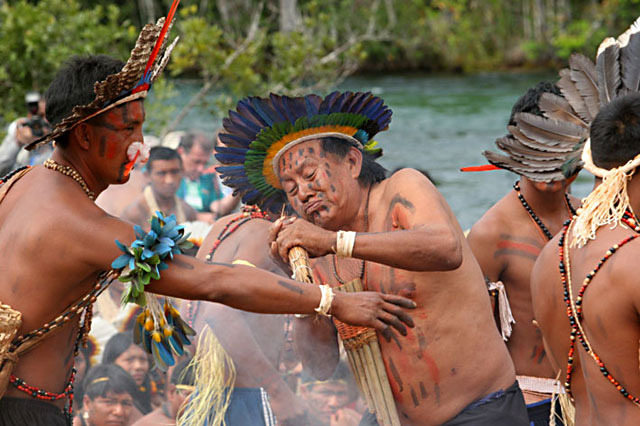
Xingu Cacique Chief
Indigenous Social Structure
Xingu cacique or chief (center) performs largely a symbolic role in Xingu
society and rules more by example rather than by making orders. According to
Xingu tradition, each man or woman is free to do what he wishes and is not
subject to the control of any other. That said, the Xingu cacique has an
important function in the Xingu social structure and in ceremonies during
which the chief reinforce relationships within the tribe and between tribes.
Caciques are not normally elected but are hereditary in nature. That is, the
chief's son inherits the cacique title. Foreign concepts such as democracy
are foreign to the Xingu way of thinking and are not used in the
transferring of the cacique title from one person to another.
|